
Non-Woven Geotextile
Home > Non-Woven Geotextile
Non-Woven Geotextile
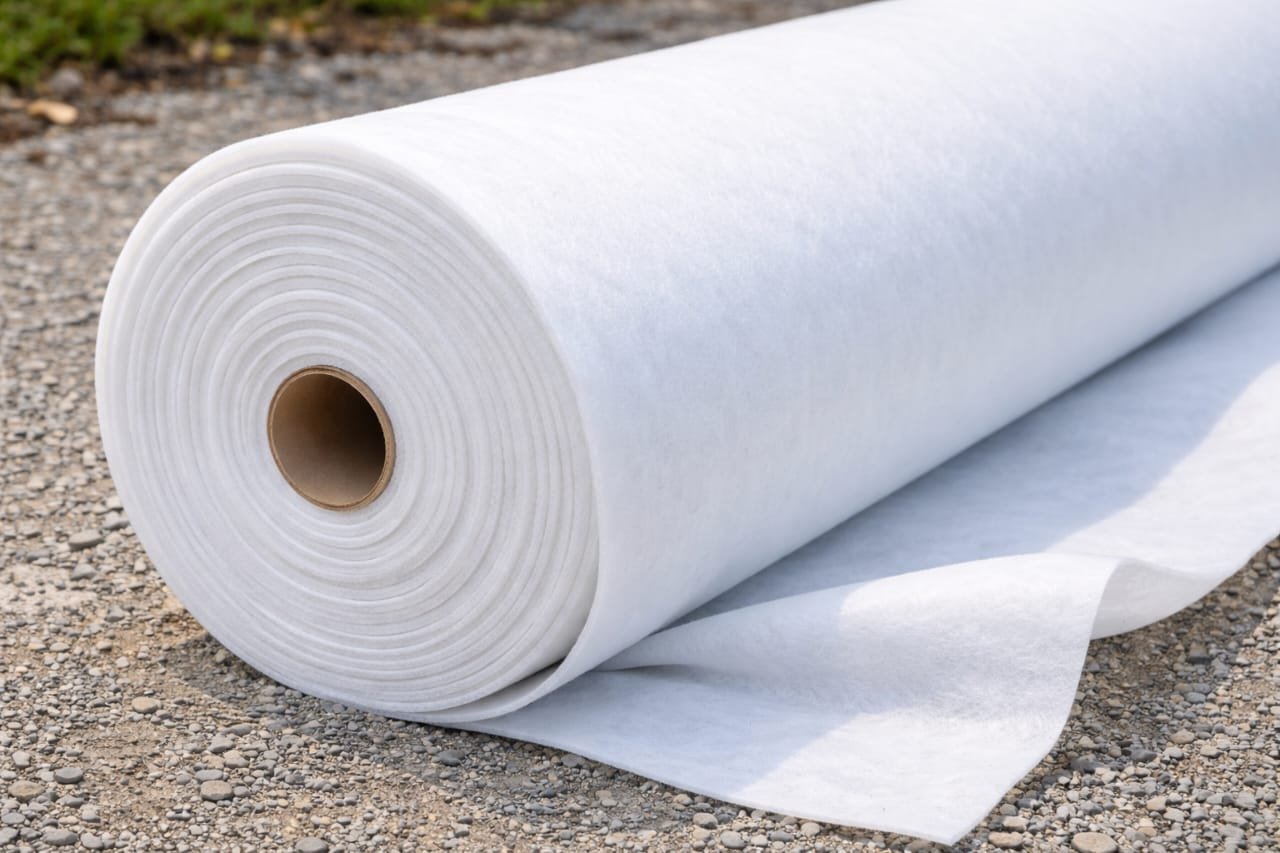
Non-woven geotextiles are manufactured from synthetic polymer fibers such as polypropylene (PP) or polyester (PET), which are mechanically, thermally, or chemically bonded together rather than woven. The fibers are randomly oriented and bonded using needle punching or heat bonding, resulting in a fabric with excellent permeability, filtration, and separation characteristics.
Non-woven geotextiles are widely used in modern civil engineering, infrastructure, and environmental projects due to their flexibility, uniform strength distribution, and ease of installation. Their ability to allow water to pass while retaining soil particles makes them an essential component in drainage and filtration systems.
Non-woven geotextiles are widely used in modern civil engineering, infrastructure, and environmental projects due to their flexibility, uniform strength distribution, and ease of installation. Their ability to allow water to pass while retaining soil particles makes them an essential component in drainage and filtration systems.
Non-Woven Geotextiles : Properties and GSM
Non-woven geotextiles are available in a wide range of GSM values, typically starting from 100 GSM and extending up to 1200 GSM, depending on application requirements.
- 100–200 GSM for light filtration and separation
- 250–400 GSM for drainage and protection layers
- 600–1200 GSM for heavy-duty protection and cushioning
The tensile strength of non-woven geotextiles generally ranges from 8 to 40 kN/m, with high elongation properties (typically 40–80%), which help absorb stresses without tearing.
Non-woven geotextiles are commonly used for:
- Drainage and filtration systems
- Separation of soil layers in road and railway construction
- Protection of geomembranes and pond liners
- Landfills and waste management systems
- Groundwater control and sub-surface drainage
- Landscaping and green infrastructure projects
Purpose
The primary purpose of non-woven geotextiles is to provide filtration, separation, drainage, and protection. Their high permeability allows water to flow freely while preventing soil migration, improving the long-term performance and durability of civil structures.
|
GSM Range
|
Strength & Properties
|
Typical Applications
|
|---|---|---|
|
100–200 GSM
|
Low tensile strength (≈8–12 kN/m);
|
high permeability; lightweight and flexible Filtration layers, landscaping, drainage trenches
|
|
200–300 GSM
|
Moderate tensile strength (≈12–18 kN/m);
|
good elongation; effective soil separation Road construction, footpaths, rail ballast separation
|
|
300–500 GSM
|
Medium tensile strength (≈18–25 kN/m);
|
good puncture resistance Drainage systems, canal linings, erosion control
|
|
500–800 GSM
|
Medium to high tensile strength (≈25–35 kN/m);
|
high durability Protection of geomembranes, landfills, embankments
|
|
800–1200 GSM
|
High tensile strength (≈35–40 kN/m);
|
excellent cushioning Heavy-duty protection layers, reservoirs, tunnels
|