
Geo grid
Home > Geo grid
Geo grid
Geogrids are high-strength geosynthetic materials designed primarily for soil reinforcement and stabilization. They are manufactured from polymers such as polypropylene (PP), high-density polyethylene (HDPE), or polyester (PET) and are formed into open grid-like structures through extrusion, weaving, or bonding processes.
The open aperture design allows soil or aggregate to interlock with the grid, creating a composite structure that significantly improves load distribution, bearing capacity, and structural stability. Geogrids are extensively used in roadways, embankments, retaining walls, and slope reinforcement projects.
The open aperture design allows soil or aggregate to interlock with the grid, creating a composite structure that significantly improves load distribution, bearing capacity, and structural stability. Geogrids are extensively used in roadways, embankments, retaining walls, and slope reinforcement projects.
Geogrids : Types & Strength Properties
Geogrids are classified based on manufacturing method and direction of strength.
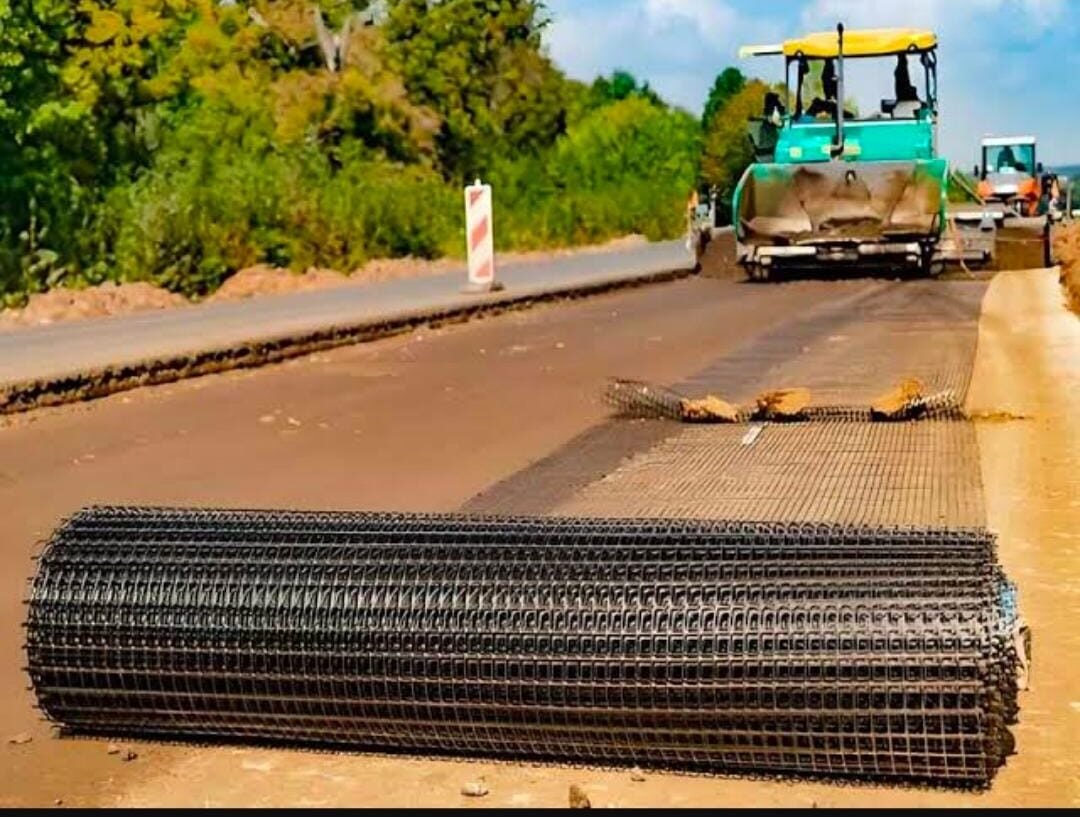
Types of Geogrids :
Uniaxial Geogrid : High strength in one direction (used for retaining walls and steep slopes)
Biaxial Geogrid : Strength in two directions (used in road and pavement construction)
Triaxial Geogrid : Multi-directional strength (used for heavy traffic and load distribution)
Biaxial Geogrid : Strength in two directions (used in road and pavement construction)
Triaxial Geogrid : Multi-directional strength (used for heavy traffic and load distribution)
Tensile Strength Range :
Geogrids are available in tensile strengths ranging from 20 kN/m to 200 kN/m, depending on type and application.
Geogrids are commonly used for :
- Road and highway base reinforcement
- Railway track stabilization
- Reinforced soil retaining walls
- Embankments over weak subgrade
- Slope stabilization and erosion control
- Pavement reinforcement for heavy traffic areas
Purpose
The primary purpose of geogrids is soil reinforcement. By interlocking with soil or aggregates, geogrids improve load transfer, reduce lateral movement, minimize rutting, and increase the service life of civil infrastructure projects.
|
Strength
|
Applications of Geogrids
|
|---|---|
|
Uniaxial Geogrid
|
High tensile strength in one direction (50–200 kN/m); low elongation Retaining walls, steep slopes
|
|
Biaxial Geogrid
|
Equal strength in two directions (20–60 kN/m); excellent aggregate interlock Roads, pavements, railways
|
|
Triaxial Geogrid
|
Multi-directional strength (30–80 kN/m); superior load distribution
|